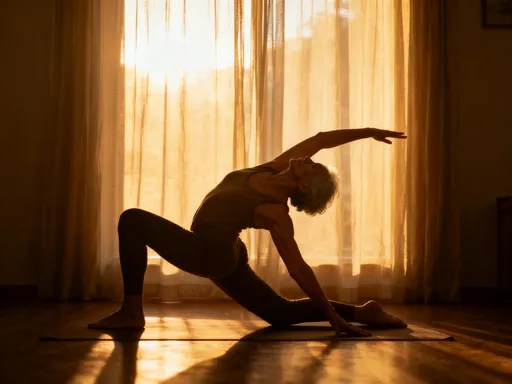
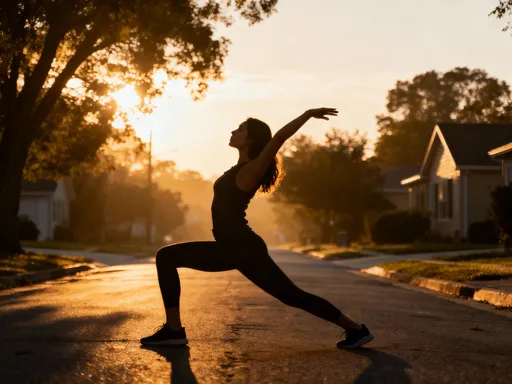
Ever feel like your thoughts are on fast-forward while your body drags behind? I’ve been there—stressed, scattered, and stuck in my head. Then I tried yoga, not just for flexibility, but to quiet the noise. What surprised me wasn’t just the calm, but how it reshaped my mindset. This isn’t about perfection on the mat; it’s about what happens off it. Let’s explore how simple practices can shift your psychology in powerful ways.
The Mental Load We Carry (And Why Stretching Isn’t Enough)
Modern life places an invisible but heavy burden on the mind. It’s not just long work hours or household responsibilities—it’s the constant mental chatter, the endless to-do lists, the pressure to stay connected, and the emotional labor of managing relationships, expectations, and self-doubt. This accumulation of stress, often called the "mental load," wears down emotional resilience over time. Many women in their 30s to 55s find themselves carrying this weight silently, believing it’s simply part of being a responsible adult. But the truth is, this chronic low-grade stress rewires the brain to stay in survival mode, making it harder to relax, focus, or respond thoughtfully.
Physical exercise is often recommended as a solution, and while movement helps, not all forms of activity address the root of emotional strain. Running, strength training, or even long walks can improve mood through endorphin release, but they don’t necessarily retrain the nervous system to shift out of reactivity. This is where yoga stands apart. Unlike workouts focused solely on calorie burn or muscle gain, yoga integrates breath, movement, and attention in a way that directly influences the autonomic nervous system. It’s not about how deep you can stretch, but how deeply you can reconnect with yourself.
Yoga functions as a mind-body reset because it asks you to slow down, tune in, and respond rather than react. When practiced with awareness, it interrupts the cycle of mental overdrive. The gap between physical activity and emotional regulation is real—and yoga bridges it. Where other exercises may exhaust the body without calming the mind, yoga invites both to rest in sync. This distinction is especially important for women managing multiple roles—mother, partner, employee, caregiver—because emotional regulation isn’t a luxury; it’s a necessity for long-term well-being.
Recognizing that mental fatigue is not laziness or weakness is the first step toward healing. The body may be tired, but the mind is often overworked. Yoga doesn’t promise to erase responsibilities, but it offers a way to carry them with greater ease. By creating space between stimulus and response, it allows for clearer choices, softer reactions, and a renewed sense of control. This isn’t about adding another task to your day—it’s about transforming how you experience each moment.
Breath First: How Controlling Air Changes Your Brain State
One of the most powerful tools in yoga isn’t visible at all: the breath. Most people don’t think about breathing unless they’re out of it, but in yoga, breath is the foundation. The practice of conscious breathing, known as pranayama, has a direct and measurable impact on the brain and nervous system. When stress hits, the body activates the sympathetic nervous system—the "fight-or-flight" response—raising heart rate, tightening muscles, and sharpening focus for survival. While useful in emergencies, this state becomes harmful when triggered too often by everyday stressors like traffic, deadlines, or family conflicts.
Yoga teaches how to shift from fight-or-flight to "rest-and-digest"—the parasympathetic state—through deliberate breathing. One of the simplest and most effective techniques is extended exhalation. By making the out-breath longer than the in-breath, even by just a few seconds, you signal safety to the brain. For example, inhaling for four counts and exhaling for six activates the vagus nerve, which acts as a brake on the stress response. This isn’t mystical—it’s physiology. Studies have shown that slow, controlled breathing reduces cortisol levels, lowers blood pressure, and improves heart rate variability, a key marker of resilience.
Another accessible method is alternate nostril breathing, or nadi shodhana. This technique involves gently closing one nostril at a time while breathing slowly through the nose. Though it may seem unusual at first, many practitioners report a sense of mental clarity and emotional balance after just a few rounds. The rhythm creates a calming effect on the mind, almost like a reset button for scattered thoughts. These practices don’t require special equipment or hours of training—just a few minutes of focused attention, ideally in a quiet space where you won’t be interrupted.
For women juggling daily demands, integrating breathwork doesn’t mean setting aside large blocks of time. It can be done while waiting for the kettle to boil, during a break at work, or even lying in bed before sleep. The key is consistency, not duration. Within days of regular practice, many notice fewer anxiety spikes, improved concentration, and a greater ability to pause before reacting emotionally. Over time, the brain begins to default to calm more easily, not because life has changed, but because the internal response has been rewired.
Postures With Purpose: Moving Emotions, Not Just Muscles
Yoga postures, or asanas, are often associated with flexibility and physical health, but their emotional impact is equally significant. The body doesn’t just respond to emotion—it stores it. Years of holding tension in the shoulders from carrying emotional weight, clenching the jaw during stressful conversations, or tightening the hips from prolonged sitting and suppressed feelings can create physical patterns that reinforce mental stress. Yoga offers a way to unlock these stored emotions not through analysis, but through mindful movement.
Different postures evoke different psychological states. Forward folds, such as child’s pose or seated forward bend, encourage surrender and introspection. These positions physically close the front of the body, creating a sense of protection and release. They’re often calming, especially when held with slow breathing, and can help ease feelings of overwhelm. In contrast, backbends like cobra or bridge pose open the chest and shoulders, counteracting the slumped posture of stress and fatigue. These poses are linked to increased confidence and emotional uplift, helping to counteract feelings of defeat or low energy.
The hips, in particular, are commonly referred to as emotional reservoirs. Many people discover unexpected emotional releases during hip-opening poses like pigeon or seated twist. This isn’t dramatic or theatrical—it’s often a quiet wave of sadness, relief, or even numbness that surfaces when long-held tension begins to dissolve. The body remembers what the mind has tried to forget, and movement can gently bring these sensations to light without the need for words. The goal isn’t to force emotions, but to create space for them to move through.
A simple sequence for emotional release might include cat-cow to awaken the spine, child’s pose for grounding, a gentle twist to release the torso, and legs-up-the-wall for nervous system recovery. This isn’t about achieving perfect form or pushing into discomfort. It’s about moving with intention and awareness, allowing each posture to serve as a mirror for inner states. When practiced regularly, such sequences help break the cycle of physical tension reinforcing emotional stress. The body learns to let go, and the mind follows.
Mindfulness on the Mat: Turning Practice Into Mental Training
While physical alignment matters in yoga, the deeper transformation happens in the mind. Mindfulness—the practice of paying attention to the present moment without judgment—is woven into every breath and movement. When you hold a pose like warrior two or tree pose, the challenge isn’t just physical balance; it’s mental steadiness. Thoughts arise: "Am I doing this right?" "I’m not flexible enough." "I don’t have time for this." Instead of reacting, yoga teaches you to notice these thoughts and return to the breath.
This mental discipline builds emotional resilience. Staying in a mildly uncomfortable position, observing the urge to quit without acting on it, trains the brain to tolerate discomfort in daily life. This translates directly to real-world situations—pausing before snapping at a child, staying calm during a disagreement, or managing frustration in traffic. The mat becomes a safe space to practice self-regulation, where small moments of patience accumulate into lasting psychological strength.
Teachers often use cues like "soften the gaze" or "release the grip in your jaw" to bring attention back to the body. These are not just physical instructions—they’re invitations to let go of mental tension. When you learn to soften physically, you begin to soften emotionally. You become more aware of how stress shows up in your body before it escalates into a full emotional reaction. This awareness is the foundation of emotional intelligence.
Over time, the boundary between yoga practice and daily life blurs. The same focus used to balance in a pose becomes the focus used to listen deeply in a conversation. The patience cultivated on the mat becomes patience in parenting, work, and relationships. Yoga, in this sense, is not an escape from life but a preparation for it—a way to show up more fully, with greater clarity and compassion.
The Pause Principle: Using Stillness to Reset Your Response Patterns
In a world that values speed and productivity, stillness is revolutionary. The pause—the intentional moment of stopping before reacting—is one of yoga’s most powerful gifts. On the mat, pauses occur between breaths, between poses, in the quiet moments of savasana. These micro-moments of stillness are not empty; they are fertile ground for awareness. It is in the pause that choice becomes possible.
Without pause, reactions are automatic. A critical comment triggers defensiveness. A missed deadline sparks panic. A child’s tantrum pulls you into your own. But when you’ve practiced pausing—even for a single breath—you create space to respond rather than react. This is not suppression; it’s self-mastery. The pause allows the nervous system to reset, the mind to clear, and the heart to soften. It transforms impulsive behavior into intentional action.
This principle extends far beyond the yoga session. Imagine receiving a stressful text from a family member. Instead of replying immediately, you take three slow breaths. In that brief interval, the initial surge of emotion passes, and you can choose a response that aligns with your values. Or consider a moment of frustration with a partner—pausing to touch your feet to the floor, feeling the ground beneath you, can ground your emotions as well. These small acts of stillness accumulate into greater emotional stability over time.
Teaching yourself to pause doesn’t require dramatic changes. It starts with noticing when you’re on autopilot—rushing, multitasking, reacting—and gently inserting a breath. Over time, the nervous system learns that not every stimulus requires an immediate response. This builds psychological flexibility, the ability to adapt to challenges without breaking. For women navigating complex emotional landscapes, the pause becomes a quiet act of empowerment.
Consistency Over Intensity: Why Short Daily Practice Beats Hour-Long Rare Sessions
Many people approach yoga with an all-or-nothing mindset: either a full 90-minute class or nothing at all. But research in neuroscience and behavioral psychology shows that consistency matters more than duration. Lasting change comes not from occasional intense effort, but from small, repeated actions. Just as brushing your teeth daily prevents cavities better than an annual deep cleaning, a short daily yoga practice prevents emotional buildup more effectively than weekly marathons.
Even ten minutes a day can yield significant benefits. A morning routine of three deep breaths, a gentle stretch, and one grounding pose sets a calm tone for the day. An evening sequence of legs-up-the-wall and a few slow breaths signals the body it’s time to rest. These micro-practices train the nervous system to return to balance regularly, preventing stress from accumulating to overwhelming levels.
Common barriers—lack of time, low energy, self-judgment—can be overcome with realistic planning. Instead of waiting for the "perfect" moment, integrate yoga into existing routines: breathe deeply while folding laundry, practice balance poses while brushing your teeth, or close your eyes and listen to your breath during a coffee break. The goal is not perfection, but presence. Letting go of the need to "do it right" removes a major obstacle to consistency.
Over weeks and months, these small efforts rewire neural pathways associated with stress and reactivity. The brain begins to associate certain cues—your mat, your breath, a quiet moment—with safety and calm. This conditioned response makes it easier to access peace when under pressure. Yoga becomes less of a practice and more of a way of being.
Beyond the Mat: Carrying Calm Into Everyday Life
The true measure of yoga’s impact isn’t how well you perform in a pose, but how you live off the mat. With regular practice, subtle but profound shifts emerge. Sleep improves because the nervous system is less agitated. Focus sharpens because the mind is less cluttered. Relationships deepen because reactivity decreases and listening increases. These changes aren’t dramatic—they’re gradual, like the slow unfolding of a flower.
Many women report feeling less irritable, more patient, and more in tune with their own needs. They notice they’re quicker to recognize when they’re overwhelmed and more willing to set boundaries. There’s a growing sense of self-awareness—not self-criticism, but compassionate observation. This isn’t about becoming a different person; it’s about returning to your true self, beneath the layers of stress and expectation.
It’s important to note that yoga is not a quick fix. Emotional rewiring takes time, and progress isn’t linear. Some days will feel clearer than others. The practice isn’t about eliminating stress but about changing your relationship to it. You won’t stop feeling pressure, but you’ll develop the inner resources to meet it with greater ease.
Viewing yoga as a lifestyle tool, rather than a class to attend, transforms its role in daily life. It becomes a way to honor your body, listen to your mind, and care for your spirit. Whether through breath, movement, or stillness, it offers a path back to balance—one intentional moment at a time.
Yoga doesn’t demand transformation overnight. It offers small, repeatable moments to retrain your mind. The real power isn’t in perfect poses—it’s in the quiet shifts that follow: clearer thoughts, calmer reactions, and a deeper sense of control. When practiced with intention, yoga becomes more than movement. It becomes a way to live.