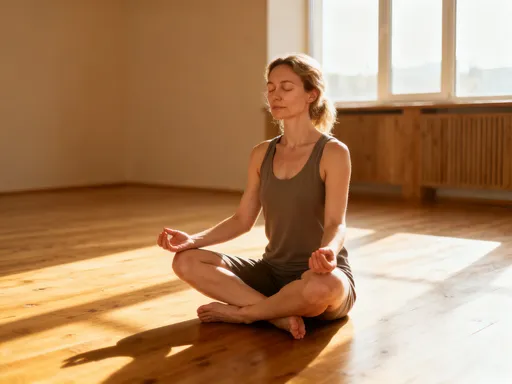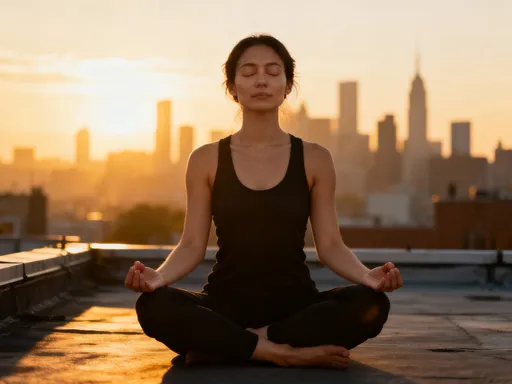
For years, I thought yoga was just stretching with deep breaths—something nice, but not life-changing. Then I started practicing consistently, not for flexibility, but to manage stress and low energy. Within weeks, something shifted. My focus sharpened, my mood stabilized, and I felt more grounded. This isn’t about extreme poses or spiritual jargon. It’s about how simple, intentional movement can reshape your health from the inside out. What began as a quiet experiment turned into a daily anchor—a non-negotiable part of my routine that didn’t demand hours, special clothing, or perfection. Instead, it offered something rare in modern life: a reliable way to reset, reconnect, and restore energy without medication, caffeine, or drastic lifestyle changes. This is not a story of transformation through intensity, but through consistency, awareness, and gentle discipline.
The Misunderstood Power of Yoga: Beyond Flexibility and Poses
Yoga is often reduced to images of advanced practitioners balanced in handstands or folded into pretzel-like shapes. While these feats are impressive, they represent only a small fragment of what yoga truly offers. At its core, yoga is not about performance or appearance. It is a practice rooted in awareness—specifically, the conscious coordination of breath, movement, and attention. This triad forms the foundation of a system that has supported human well-being for thousands of years, long before it became a trend in wellness studios. For the average person, especially women navigating the demands of family, work, and personal care, yoga’s greatest benefit lies not in how far you can stretch, but in how deeply you can listen to your body.
Many women in their 30s to 55s carry layers of unspoken tension—responsibility, emotional labor, the constant switching between roles. Yoga meets this reality not with demands, but with permission: permission to pause, to breathe, to simply be. Scientifically, this practice activates the interoceptive system, which helps the brain receive signals from within the body. When we tune into these signals—tight shoulders, shallow breathing, a racing heart—we gain insight into our internal state. This awareness is the first step toward regulation. Unlike high-intensity workouts that stress the body further, yoga often works in the opposite direction: it signals safety, reduces physiological arousal, and fosters a sense of internal calm.
One of the most persistent myths is that yoga requires flexibility. In truth, stiffness is one of the best reasons to begin. The practice meets you where you are. A simple seated forward bend, even with knees bent and hands not reaching the toes, can initiate a cascade of relaxation responses. What matters is not the depth of the pose, but the quality of attention. When breath is slow and steady, when movement is intentional, the nervous system begins to shift from a state of survival to one of restoration. This is not mystical—it is physiological. And it is accessible to anyone willing to try, regardless of age, fitness level, or prior experience.
Why Modern Life Screams for a Yoga Reset
Life today is structured in a way that rarely allows for true rest. The average adult woman in this age group often manages multiple roles—professional, caregiver, partner, household manager—without built-in pauses. The result is a chronic state of low-grade stress, often unnoticed until it surfaces as fatigue, irritability, or difficulty sleeping. The body’s stress response, designed for short-term threats, remains activated far longer than intended. Cortisol, the primary stress hormone, stays elevated. Heart rate variability decreases. The sympathetic nervous system—the “fight or flight” branch—becomes overused, while the parasympathetic system—the “rest and digest” counterpart—gets neglected.
Consider the typical afternoon: eyes strained from screens, shoulders tense from sitting, mind racing with unfinished tasks. Many reach for coffee or sugar to push through, only to crash later. This cycle isn’t just tiring—it’s damaging over time. Chronic stress is linked to increased inflammation, weakened immune function, and higher risks for conditions like hypertension and metabolic syndrome. What’s often missing is a reliable, non-pharmacological way to signal safety to the body. This is where yoga becomes essential. Unlike scrolling through social media or watching TV—activities that still stimulate the brain—yoga offers a different kind of pause. It engages the body gently while calming the mind, creating the conditions for true recovery.
Even ten minutes of mindful movement can interrupt this stress cycle. A few slow breaths with extended exhalations, a gentle neck roll, or a seated twist can activate the vagus nerve, a key component of the parasympathetic nervous system. This activation lowers heart rate, reduces blood pressure, and improves digestion. The beauty of yoga in this context is its immediacy. You don’t need to wait for a weekend retreat or a vacation to feel relief. The tools are portable, free, and always available. For women who feel they have no time to care for themselves, yoga offers a way to integrate self-care into the existing rhythm of the day—without adding another item to the to-do list.
The Science Behind the Stillness: What Research Actually Says
While personal anecdotes are compelling, the growing body of scientific research on yoga provides strong validation for its health benefits. Institutions such as Harvard Medical School, the National Institutes of Health (NIH), and leading universities have conducted studies showing measurable improvements in both mental and physical health with regular yoga practice. These findings are not based on isolated cases or subjective reports, but on controlled trials, biomarkers, and neuroimaging data. For example, multiple studies have demonstrated that consistent yoga practice leads to significant reductions in cortisol levels, particularly in individuals with chronic stress or anxiety.
One NIH-funded review analyzed over 100 clinical trials and found that yoga interventions consistently improved outcomes in areas such as sleep quality, mood regulation, and perceived stress. Participants reported falling asleep faster, staying asleep longer, and waking up feeling more refreshed. Brain imaging studies have shown increased gray matter density in regions associated with emotional regulation and attention, such as the prefrontal cortex and hippocampus. These changes suggest that yoga doesn’t just make people feel better—it physically reshapes the brain in ways that support resilience and cognitive clarity.
Other research highlights yoga’s impact on heart health. A study published in the European Journal of Preventive Cardiology found that participants who practiced yoga three times a week for 12 weeks experienced improvements in blood pressure, cholesterol levels, and heart rate variability—comparable to the benefits seen with moderate aerobic exercise. Importantly, these benefits were achieved without high-impact movement or intense exertion. This makes yoga a uniquely accessible option for individuals who may not tolerate traditional exercise due to joint pain, fatigue, or other health concerns.
It’s crucial to note that yoga is not presented as a cure for medical conditions. Rather, it functions as a complementary strategy—a low-risk, high-reward practice that supports overall health. The evidence does not support exaggerated claims like “yoga reverses disease,” but it does confirm that regular practice contributes to better stress management, improved mood, and enhanced physical function. For women seeking sustainable, science-backed ways to improve daily well-being, yoga stands out as a practice grounded in both tradition and modern research.
Finding Your Entry Point: No Mat, Studio, or Experience Needed
One of the most common reasons people avoid yoga is the belief that they need special equipment, a dedicated space, or prior experience. This perception creates an unnecessary barrier, especially for busy women who already feel they have too little time. The truth is that yoga can begin anywhere—on a kitchen chair, beside a bed, even during a work break. The most effective entry points are often the simplest: a few conscious breaths, a gentle stretch, or a moment of stillness. These micro-practices, when repeated consistently, create real change over time.
Start with breath. The foundation of yoga is pranayama, or breath regulation. One accessible technique is diaphragmatic breathing: inhale slowly through the nose, allowing the belly to expand, then exhale fully, drawing the navel gently toward the spine. Repeat for two to five minutes. This simple act signals safety to the brain and begins to shift the nervous system into a calmer state. No mat, no instructor, no special clothing—just a few minutes of intentional breathing.
Another beginner-friendly practice is the seated spinal twist. Sit on a chair with feet flat on the floor. Inhale to lengthen the spine, then exhale and gently twist to the right, placing the left hand on the right knee and the right hand on the chair back. Hold for a few breaths, then switch sides. This movement releases tension in the spine and improves circulation to the digestive organs. Similarly, a forward fold—seated or standing—can relieve lower back tension and quiet the mind. Bend the knees generously, let the head hang, and breathe deeply. These movements are not about achieving a perfect shape, but about creating space and releasing stored tension.
The key is consistency, not duration. Two minutes a day is more beneficial than twenty minutes once a week. Over time, these small practices build neural pathways that support relaxation and self-awareness. They become anchors in a busy day, moments of return. The goal is not to master a pose, but to cultivate a habit of presence. When yoga is framed this way—as a series of accessible, repeatable actions—it becomes less intimidating and more integrated into daily life.
Building a Routine That Sticks: From “I Should” to “I Do”
Motivation is fleeting. What sustains healthy habits is structure. Many women start yoga with enthusiasm but struggle to maintain it when life becomes overwhelming. The shift from “I should do yoga” to “I do yoga” happens not through willpower, but through intentional design. The most effective routines are built around existing behaviors, making them easier to remember and less likely to be skipped. This concept, known as habit stacking, involves linking a new habit to an established one.
For example, after brushing your teeth in the morning, take two minutes to stand and stretch. After brewing coffee, sit and practice three rounds of deep breathing. Before checking your phone at night, lie down and do a gentle body scan—bringing attention slowly from the feet to the head, noticing areas of tension without judgment. These small connections embed yoga into the natural flow of the day, reducing the mental effort required to begin.
Timing also matters. Some women find morning practice sets a calm tone for the day, while others prefer evening sessions to release accumulated tension. There is no single right time—only what works for your rhythm. The environment doesn’t need to be perfect. A quiet corner, a folded towel on the floor, or a chair can serve as your practice space. The goal is accessibility, not aesthetics. Tracking progress can also help, but not in the way many expect. Instead of measuring success by how long you practiced or how advanced the poses were, focus on consistency. Mark a calendar each day you practice, even if it’s only for two minutes. Over time, the visual record reinforces the habit.
It’s also important to anticipate obstacles. Fatigue, family demands, or unexpected events will sometimes interrupt practice. The response should not be guilt, but flexibility. If you miss a day, begin again the next. Self-compassion is part of the practice. Yoga teaches us to meet ourselves where we are—not where we think we should be. This mindset reduces the pressure that often derails new habits and supports long-term adherence.
Listening to Your Body: The Real Measure of Progress
In a culture that values speed, achievement, and visible results, yoga offers a different metric of success. Progress is not measured in how many poses you can do, but in how well you can listen. The body communicates constantly—through tension, breath patterns, energy levels, and emotional shifts. Yoga cultivates the skill of tuning in. Over time, practitioners begin to notice subtle changes: a deeper breath upon waking, less jaw clenching during stress, an increased ability to pause before reacting.
These shifts are real, even if they don’t show up on a scale or fitness tracker. A woman might realize she no longer reaches for snacks out of stress, or that she sleeps through the night without waking. Another might notice she responds to a child’s tantrum with more patience, or that she feels lighter after a day of sitting. These are signs of nervous system regulation—proof that the body is learning to return to balance more easily.
The practice also teaches boundaries. In yoga, you learn to distinguish between discomfort that invites growth and pain that signals harm. This awareness extends beyond the mat. It supports better decision-making around rest, nutrition, and relationships. It fosters self-respect. Pushing too hard—whether in a pose or in life—leads to burnout. Yoga encourages a different approach: steady, sustainable effort with kindness. This is not passive; it is deeply courageous. It takes strength to slow down, to honor limits, to choose care over performance.
Over time, the body becomes a trusted guide. You learn its rhythms, its needs, its wisdom. This relationship is not built in a day, but through repeated, mindful attention. The poses are simply the vehicle. The real transformation happens in the quiet moments between movements—the breath, the pause, the awareness. This is where resilience is cultivated, not through force, but through presence.
Yoga as a Daily Health Mindset—Not Just a Workout
Ultimately, yoga is less about what you do on the mat and more about how you move through life. The habits formed in practice—breathing through discomfort, pausing before reacting, returning to center—become internal resources. They influence choices around food, sleep, and relationships. A woman who practices yoga may find herself choosing a nourishing meal over convenience food, not out of discipline, but because she feels more connected to her body. She may prioritize sleep, not as a luxury, but as a form of respect for her well-being.
These shifts are not dramatic, but they are profound. Yoga becomes a quiet foundation—a steady undercurrent of awareness that supports daily living. It doesn’t eliminate stress, but it changes the relationship to it. Challenges still arise, but the response becomes more measured, more compassionate. This is the essence of holistic health: not the absence of difficulty, but the presence of resilience.
For women in their 30s to 55s, who often place the needs of others before their own, yoga offers a rare permission: to care for oneself without guilt. It is not selfish; it is necessary. A calmer, more centered mother, partner, or professional creates a ripple effect, improving the quality of life for everyone around her. The practice doesn’t require hours or expertise. It begins with a single breath, a moment of intention, a decision to show up for yourself.
Yoga is not a trend. It is not a performance. It is a practical, accessible, science-supported way to reclaim energy, clarity, and calm in a demanding world. It asks only for presence, not perfection. And in that simplicity lies its power. One breath at a time, it builds a life of greater balance, deeper connection, and lasting well-being.